Welcome to CLPHA's Press Room
CLPHA experts welcome interview requests from print, radio, television, and online reporters and are happy to provide their insights on issues of public housing and related legislation and policy.
For media inquiries, please contact:
David Greer
Director of Communications
(202) 550-1381 or [email protected].
*Please let us know if you are working on deadline.
To view all of CLPHA's press releases, click here.
To view all of CLPHA's press statements, click here.
You can subscribe here to our biweekly newsletter, events invite list, and topic specific newsletters. You can also follow us on Twitter at @CLPHA. Or, send us an email with your interests and we would be happy to add you to our press lists.
Thanks again for your interest in CLPHA!
|
(Washington, D.C.) November 25, 2024 – The Council of Large Public Housing Authorities Executive Director Sunia Zaterman released the following statement upon the nomination of Scott Turner to be Secretary of the Department of Housing and Urban Development: “The Council of Large Public Housing Authorities (CLPHA), whose members serve over 2.2 million people, including over 480,000 children, across the country, congratulates Scott Turner on his nomination as Secretary of the United States Department of Housing and Urban Development (HUD). Our nation is experiencing an unprecedented housing crisis, and PHAs offer critical affordable housing opportunities to the most vulnerable families in their communities. Safe, stable, and affordable housing is central to breaking the cycle of poverty and expanding economic, education, and health opportunities. We look forward to working with Mr. Turner on our shared goal of improving the lives of low-income Americans who, for a variety of reasons, have been left behind economically, and lifting up the communities where they live through safe and affordable housing.” |
|
###
About the Council of Large Public Housing Authorities
About CLPHA’s Housing Is Initiative
Media Contact: (202) 550-1381 |
Congratulations to Deputy Secretary Adrianne Todman on New Role as Acting Secretary
|
(Washington, D.C.) March 12, 2024 — “On behalf of the Council of Large Public Housing Authorities, we congratulate HUD Secretary Marcia L. Fudge on a dedicated career in public service from serving as Mayor of Warrensville Heights, Ohio, to U.S. Congresswoman from Ohio’s 11th district, and culminating as the 18th Secretary of the U.S. Department of Housing and Urban Development,” said Sunia Zaterman, executive director of the Council of Large Public Housing Authorities. “When Secretary Fudge took the reins of HUD in the middle of a global COVID-19 pandemic, she provided steadfast leadership that expanded rental assistance and served more than 1.2 people experiencing homelessness. She has been an ardent housing champion giving voice to millions of people in need. “Secretary Fudge worked with CLPHA throughout her tenure to provide greater flexibility to address housing needs and redress systemic racism that has been embedded in housing policy for decades. “We commend her on an exemplary career in public service and wish her well in the next chapter of her life. We look forward to working with Deputy Secretary Adrianne Todman, former CLPHA Vice President, in her new role as Acting Secretary.” |
|
### Media Contact: David Greer, CLPHA
About the Council of Large Public Housing Authorities About CLPHA’s Housing Is Initiative |
|
Policies Would Bring Housing Stability to Nearly 1 Million Low-Income Americans |
|
(Washington, D.C.) March 7, 2024 — The Council of Large Public Housing Authorities (CLPHA) applauds President Joe Biden for his call to expand the Housing Choice Voucher (HCV) and Low-income Housing Tax Credit (LIHTC) programs. As part of the proposed HCV program expansion, the President is calling for a voucher guarantee for low-income veterans and youth aging out of foster care. Notably, President Biden is the first U.S. President to call for a portion of federally assisted housing to be classified as a guarantee. “President Biden’s call for voucher and LIHTC expansion would immediately bring housing stability to nearly one million low-income Americans who are one lost paycheck or unforeseen health event away from homelessness,” said Sunia Zaterman, CLPHA executive director. “Moreover, the President’s extraordinary call to guarantee vouchers for low-income veterans and youth aging out of foster care is a transformative measure that would bring much-needed certainty to a portion of federal housing funding. This demonstrates a commitment to safeguarding housing stability for our nation's most vulnerable populations.” This year’s State of the Union address is considered by many to be the kickoff of President Biden’s 2024 election campaign. “It is clear after tonight that President Biden intends to make housing a top election priority,” said Zaterman. “We encourage President Biden to become the housing president by creating a comprehensive long-term plan for a sustainable future for public housing that would include the recapitalization of the public housing portfolio, permanent expansion of the Housing Choice Voucher program, and a cross-sector approach that includes housing, health, and education. We look forward to working with the President on such a plan.” |
|
### Media Contact: David Greer, CLPHA
About the Council of Large Public Housing Authorities
About CLPHA’s Housing Is Initiative |
If Enacted, the Proposal Would Also Negatively Impact Private Property Owners and Increase Homelessness
WASHINGTON, D.C. (May 6, 2025) – The Council of Large Public Housing Authorities (CLPHA) released the following statement in response to the Trump administration’s fiscal year 2026 (FY26) budget proposal:
“The Trump administration’s proposed budget that slashes $26.7 billion from U.S. Department of Housing and Urban Development’s rental assistance programs would cause irreparable harm to HUD programs that are essential lifelines to our nation’s children, seniors, and persons with disabilities, while also endangering private property owners who participate in federal rental assistance programs.
“If the President’s proposal were to be enacted, the interruption to vital rental assistance programs would be seismic and lead to a dramatic increase in homelessness in a nation where current rental subsidies only serve one out of our every four persons who qualify. With more than 600,000 private property owners participating in the Section 8 voucher program nationally, the economic impact of decimating these programs would lead to mortgage defaults and foreclosures just as the nation’s economy is worsening.
“Not only does the President’s budget cut rental assistance programs, but it also redesigns them into a state-based formula grant. History shows that block-granted programs often experience reduced funding over time, leading to fewer individuals served and increased poverty. This proposal would force state and local governments to implement significant cuts to current rental assistance programs due to diminished funds and limited capacity, threatening hundreds of thousands of families with homelessness.
“The FY25 final budget recognized the critical importance of funding rental assistance programs, and we urge Congress to continue fully funding rental assistance in the FY26 budget so that no family has to lose their home. CLPHA will work with Congress to advance a budget that keeps families housed and does not exacerbate homelessness and housing instability in America.”
About the Council of Large Public Housing Authorities
The Council of Large Public Housing Authorities is a national non-profit organization that works to preserve and improve public and affordable housing through advocacy, research, policy analysis and public education. CLPHA’s 85 members represent virtually every major metropolitan area in the country. Together they manage 40 percent of the nation’s public housing program; administer more than a quarter of the Housing Choice Voucher program; and operate a wide array of other housing programs. Learn more at clpha.org.
Media Contact:
David Greer, CLPHA
[email protected]
(202) 550-1381
|
(Washington, D.C.) February 20, 2025 – The Council of Large Public Housing Authorities’ (CLPHA) Executive Director Sunia Zaterman released the following statement regarding the latest threats to public housing authorities (PHAs) posed by cuts to HUD programs and staff and a potential government shutdown: “PHAs are facing a triple threat from an expiring continuing funding resolution, slashing of some HUD programs, and cuts to HUD staff critical to program implementation. It has been reported that 50 percent of staff positions may be eliminated through early retirement and reductions in the workforce. These draconian actions are compounded by the looming federal government shutdown unless Congress passes an FY25 government funding bill by March 14. CLPHA urges Congress to protect HUD programs and staff and prevent a government shutdown. “The federal government is currently funded under an extension called a continuing resolution (CR) that expires on March 14. The government has yet to agree on and finalize the 2025 budget and without another CR to extend funding, the government will shut down. “A government shutdown disrupts PHA operations and continuity of service to residents, voucher holders, private owners, investors, and partners. Appropriators have still not agreed to the total amount of the budget, which is the first step in the budget process. After that it takes weeks to finalize and pass full year appropriations bills. Securing HUD funding is critical to protecting PHAs, residents, and staff. Congress must pass a full year FY25 appropriations bill that provides adequate funding for HUD programs.” |
|
###
About the Council of Large Public Housing Authorities
Media Contact: (202) 550-1381 |
|
(Washington, D.C.) November 25, 2024 – The Council of Large Public Housing Authorities Executive Director Sunia Zaterman released the following statement upon the nomination of Scott Turner to be Secretary of the Department of Housing and Urban Development: “The Council of Large Public Housing Authorities (CLPHA), whose members serve over 2.2 million people, including over 480,000 children, across the country, congratulates Scott Turner on his nomination as Secretary of the United States Department of Housing and Urban Development (HUD). Our nation is experiencing an unprecedented housing crisis, and PHAs offer critical affordable housing opportunities to the most vulnerable families in their communities. Safe, stable, and affordable housing is central to breaking the cycle of poverty and expanding economic, education, and health opportunities. We look forward to working with Mr. Turner on our shared goal of improving the lives of low-income Americans who, for a variety of reasons, have been left behind economically, and lifting up the communities where they live through safe and affordable housing.” |
|
###
About the Council of Large Public Housing Authorities
About CLPHA’s Housing Is Initiative
Media Contact: (202) 550-1381 |
In an interview with radio program Marketplace for its November 4 story "Apple pledges $2.5 billion to ease California’s housing crisis," CLPHA Executive Director Sunia Zaterman told reporter Jack Stewart that Apple's recent $2.5 billion Bay Area affordable housing pledge is an important starting point in addressing the nation's affordable housing shortage, but also noted that much more money is needed to help public housing authorities provide affordable housing for low-income individuals and families. Zaterman told Stewart that public housing needs an injection of $50 to 70 billion to address its massive capital needs backlog.
“The giving back here [by Apple] should be seen as necessary and required,” said Zaterman, “because these corporations are benefiting from the workforce, from the transportation systems, health systems, that are already in their communities.”
Read or listen to Marketplace's story.
In a new op-ed for The Hill, a prominent political newspaper widely read by policymakers, CLPHA Executive Director Sunia Zaterman underscores the role of public housing authorities (PHAs) as essential partners in local efforts to house those who are particularly vulnerable to housing insecurity, including unsheltered families, veterans, people with disabilities, youth aging out of foster care, victims of domestic violence, and returning citizens. Programs like the Minneapolis Public Housing Authority’s Stable Homes Stable Schools and the Oakland Housing Authority’s Building Bridges are examples of how PHAs are leveraging their limited resources and local partnerships to create more opportunities for housing stability.
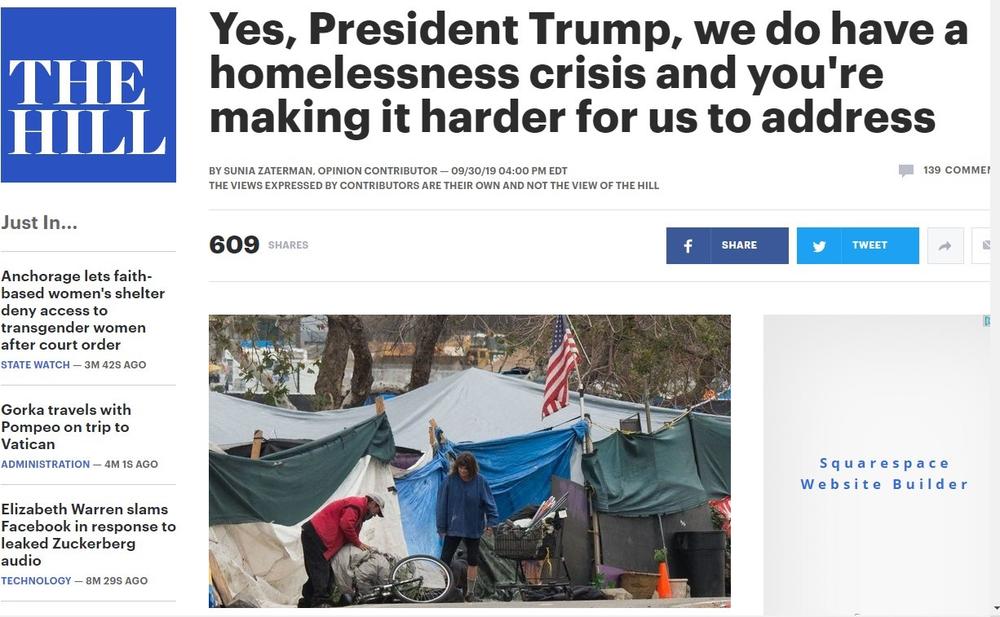
Yet, the President’s proposed FY2020 HUD budget would reduce the agency’s funding by more than 16 percent and slash the public housing operating and capital funds by $4.6 billion, which would seriously impede PHAs’ and their communities’ abilities to address the housing needs of low-income and housing-insecure people.
Though House and Senate appropriators propose modest funding increases in their FY20 spending bills, Zaterman argues that level funding is not enough to meet the growing and urgent demand for housing that is safe and affordable. “We can address the crisis of homelessness in America, and public housing authorities are prepared to help solve it with appropriate resources.”
Part two of Affordable Housing Finance’s special report “Turning Point for Public Housing,” explores tools such as the Rental Assistance Demonstration (RAD) program and Low-Income Housing Tax Credits (LIHTC) that public housing authorities can use to recapitalize and redevelop properties for their residents and communities. In the face of unsustainable federal funding levels, CLPHA Executive Director Sunia Zaterman tells the magazine that public housing is at a crossroads, but with the right tools, “we could have the portfolio totally recapitalized in 10 years.”
Zaterman was also featured in part one of the series to discuss the impact of the federal disinvestment in public housing. “We have lost about 10,000 units a year from underfunding,” she said. But, “the number of public housing units lost may have slowed to about 8,000 a year, thanks to RAD, in the last couple of years.”
Read the series, which includes interviews with housing advocates, policy experts, and policymakers, online here.
NPR’s May 16 story, which also aired May 22 on NPR’s Morning Edition, “Trump Administration Wants To Cut Funding For Public Housing Repairs,” featuring District of Columbia Housing Authority Executive Director Tyrone Garrett and CLPHA Executive Director Sunia Zaterman, underscores the need to reinvest in public housing with funding for the capital needs backlog and more tools for recapitalization and redevelopment.
Of the Trump Administration’s proposal to slash funding for public housing, Garrett says, “Other housing authorities throughout the country are in the same boat. We're looking for opportunities to be able to improve the lives of our families, and it's becoming increasingly difficult with the funding cuts."
In Affordable Housing Finance's (AHF) article discussing Rep. Maxine Waters' (D-CA) draft legislation of her Housing is Infrastructure bill, CLPHA's Sunia Zaterman told reporter Donna Kimura that Waters' bill, which would allocate $70 billion for the public housing capital fund, is attempting to get the public housing industry "on an even keel."
Zaterman told Kimura, “We do have challenges moving forward in the appropriations process on the annual funding levels for public housing operating and capital funds, but what Ms. Waters is saying in this bill is that we can no longer stand by idly and watch this public investment start to crumble when we need it the most.”
Zaterman added that Congress must also consider expanding additional tools that PHAs can employ in their public housing development and renovation efforts, such as the Rental Assistance Demonstration (RAD) program and Low-Income Housing Tax Credits (LIHTCs).
AHF also quoted Zaterman's April 30 press statement on Waters' draft legislation and the House Committee on Financial Services April 30 hearing “Housing in America: Assessing the Infrastructure Needs of America’s Housing Stock":
“Public housing is as a much a part of the national infrastructure as Route 66, the Lincoln Tunnel, and the Hoover Dam,” said Sunia Zaterman, executive director of the Council of Large Public Housing Authorities. “Public housing helps communities and families thrive by providing more than 1 million low- and very low-income families, children, elderly, and persons with disabilities with a stable place to live, connecting low-income workers to economic opportunities, and spurring regional job creation and economic growth.”
“But, years of chronic underfunding have led to the deterioration of the public housing stock, and, since 1990, at least 300,000 units have been lost because of the lack of adequate resources to maintain them. The federal disinvestment in public housing has contributed to an untenable shortage of stable housing for low-income households,” Zaterman added.
From the Cuyahoga Metropolitan Housing Authority's website:
The Cuyahoga Metropolitan Housing Authority (CMHA) hosted its annual Senior Jamboree at Wendy Park, connecting senior residents from across Cuyahoga County to important health, wellness, and adult support services.
The annual event pairs community engagement with direct access to local service providers in a central, accessible setting.
CMHA extends its sincere gratitude to the event sponsors: Dedicated Senior Medical, Saber Healthcare, ArchWell Health, Department of Senior and Adult Services, Care Source, Humana, and Anthem Blue Cross/Blue Shield. Their financial contributions helped make this year's Senior Jamboree possible.
The agency also thanks the numerous local vendors, healthcare providers, civic organizations, and county agencies that attended to offer on-site health screenings, wellness tools, and social services.
Direct outreach and interagency collaboration remain critical to supporting the health, stability, and ongoing independence of CMHA senior residents. By bringing service providers together in one location, the agency and its partners help eliminate barriers to vital community resources.
From The NYCHA Journal:
In August, children visiting select Brooklyn pools had the opportunity to enjoy refreshing ices and pick out free books to take home thanks to the Brooklyn Public Library, NYCHA, and the National Book Foundation’s Book Rich Environments (BRE) program.
Events were hosted at Betsy Head Pool, Commodore Barry Pool, and Bushwick Playground and Pool, where a variety of free books in English and Spanish were available for a range of ages, including picture books, chapter books, and graphic novels.
“Every child deserves the opportunity to discover the joy of reading,” said NYCHA Chief Executive Officer Lisa Bova-Hiatt. “We are grateful to the Brooklyn Public Library, the National Book Foundation, and all of our partners for helping bring thousands of free books to NYCHA families, and I encourage every young resident to join us this summer, pick out a book of your own, and discover where a great story can take you.”
BRE helps children living in public housing develop a lifelong joy of reading by connecting them with reading-related resources. Through the program, NYCHA has distributed over 425,000 free books to young people and families, and over the last two years, Brooklyn Public Library has distributed over 16,000 books in partnership with the National Book Foundation and NYCHA.
“Through Book Rich Environments, young people and families in New York City, and across the country, get to experience the joy of choosing a book of their choice and reading it in parks, pools, and homes,” said Ruth Dickey, Executive Director of the National Book Foundation. “We’re tremendously grateful to our partners at the Brooklyn Public Library and New York City Housing Authority, who constantly find ways to connect books with as many New Yorkers as possible.”
This year, NYCHA’s Office of Public-Private Partnerships received 50,000 books for children for distribution at events and community centers at the following developments: Astoria Houses, Drew-Hamilton Houses, Grant Houses, Gowanus Houses, Marble Hill Houses, Parkside Houses, Pelham Parkway Houses, Stapleton Houses, and Tompkins Houses.
From the Fort Worth Report:
Fort Worth Housing Solutions will cut the ribbon on Babers Manor, the latest piece of the plan to redistribute the units of the former Cavile Place housing project, Sept. 23.
The grand opening of Babers Manor, 4400 Ramey Ave., is at 9 a.m. Named for the community leader Clarence Donald Babers, Babers Manor includes townhomes and garden apartments. Fort Worth Housing Solutions opened the waitlist for the property earlier this spring.
The property is one of several that housing solutions and partners are building to create more than 900 units across Stop Six that will replace the demolished Cavile Place housing project and its 300 units.
The Cavile replacements are being done in six pieces:
-
Cowan Place, with 174 senior living units at 5400 E. Rosedale St., opened in fall 2023 to tenant move-ins and held its grand opening that November. Cowan Place is named after Alonzo and Sarah Cowan, two of the earliest landowners in Stop Six.
-
Hughes House Phase 1, with 162 units, held its grand opening in October 2025 at 4830 E. Rosedale St. Hughes House — named after the late Dunbar High School coach Robert Hughes — has a fitness center, clubhouse, dog park and 8,000 square feet of commercial space available for lease by JLL for uses such as a restaurant, bodega, pharmacy and other local businesses.
-
Babers Manor, part of Phase 3.
-
Hughes House Phase 3, 78 units, is expected to open next year. It is being completed ahead of the second phase of Hughes House.
-
Hughes House Phase 2, 300 units, will have a community pool and splash pad. Construction started earlier this year.
-
Miller/Rosedale: The timetable for this final phase of the Cavile project isn’t set yet, but the project should include about 125 units, a housing solutions spokesperson said.
From The Charlotte Post:
Charlotte’s housing authority is looking for a new leader.
President and chief executive Fulton Meachem, who has led Inlivian since 20212, is retiring effective Sept. 25. The quasi-public real estate holding agency underwent a branding transition from Charlotte Housing Authority in 2019 to reflect its wider focus on community development through housing, economic opportunity, employment and education.
“It has been one of the great privileges of my career to serve the residents and communities of Charlotte and to work alongside so many talented and dedicated people,” Meachem said in a statement. “As I retire, I do so with tremendous gratitude and pride in what we have accomplished together. Inlivian is well positioned to continue addressing Charlotte’s housing challenges, and I have great confidence in the people who will carry this important work forward.”
The agency has undergone significant change and milestones under Meachem. Inlivian developed more than 1,600 mixed-income apartments using financing tools including Low-Income Housing Tax Credits, Tax-Exempt Bond Financing, and federal housing resources. Among the projects was a 14-acre land transfer from Atrium Health earlier this year as part of a 2021 pledge for development of The Pearl medical innovation district.
Atrium’s gift included parcels at North Tryon, West 32nd and Poplar streets.
Renderings for the site showed a development combining the Atrium parcel and a nearby Inlivian-owned site into a 27-acre neighborhood with 1,200 apartments, 44 townhomes for sale, retail and amenities including walking trails and outdoor amphitheater.
Another project was a 2022 collaboration with Urban Atlantic, a mixed-use housing developer, to build a “socially inclusive” apartment community for working professionals at 8th and North Tryon streets in Center City. Thirty percent of the units were designated for households earning less than the area median income.
“We are grateful for Fulton’s leadership, dedication, and more than a decade of service to Inlivian,” board chair Antoine Dennard said.
From The San Antonio Report:
The headlines detailing San Antonio’s persistent poverty are numbingly familiar. Yet they must not breed complacency — they must serve as a reckoning and a call to action.
We know poverty is a tangled web of inadequate transportation, underfunded education and historical discrimination. But at its root lies a deeper crisis: the lack of stable, affordable housing.
In a landmark study, Harvard economist Raj Chetty and fellow researchers found that “economic connectedness” is one of the clearest predictors of upward mobility. Children who grow up in economically diverse communities — rather than pockets of concentrated poverty — are successfully breaking the cycle of generational poverty across the country. Chetty’s research shows that this form of “social capital” can shape a child’s future in ways that extend beyond traditional measures of community support.
In San Antonio, however, the architecture of segregation still stands and is the bedrock of our persistent poverty.
One need only look at our near West Side — the most economically distressed neighborhood in our city, and one of the most impoverished in the nation. It is home to three legacy public housing communities built in the 1930s. For eight decades, these communities have inadvertently locked segregation into our urban landscape. As someone born in one of these legacy communities, I know firsthand that this cycle did not happen by accident. It was built by design.
The federal redlining of the last century drew rigid lines around our communities, cementing the racial and economic segregation we see today. To its credit, federal housing policy has evolved significantly since that era, replacing discriminatory practices with a genuine commitment to progress. At the same time, acknowledging how far national policy has come also requires recognizing how far we still have to go to address the lasting legacy of those early decisions.
...
We must break down these economic walls — both figuratively and literally — for the sake of preserving our affordable housing stock and for the economic vitality of our city.
To do so, Opportunity Home is investing more than $2.5 billion into Strategy 2037: A Centennial Vision. Named for the organization’s upcoming 100th anniversary, this roadmap is designed to add or preserve nearly 15,000 affordable housing units across the city. It marks the single largest investment in affordable housing in San Antonio since the New Deal.
Crucially, Strategy 2037 flips the script on the traditional housing financing model. By securing a national Standard & Poor’s (S&P) credit rating, Opportunity Home can now independently finance long-overdue preservation needs and new construction rather than waiting on volatile federal funding. This physical infrastructure investment will complement ongoing dedicated community partnerships to provide holistic resident support services like digital connectivity, education resources and training to help residents reach financial independence.
Beginning this year, we are transitioning 6,000 traditional public housing units into a more stable, federally subsidized model. This bipartisan, Congress-supported framework will inject hundreds of millions of dollars into our neighborhoods while modernizing aging infrastructure and strictly protecting affordability.
Read the full op-ed by Opportunity Home San Antonio President & CEO Michael Reyes.