Welcome to CLPHA's Press Room
CLPHA experts welcome interview requests from print, radio, television, and online reporters and are happy to provide their insights on issues of public housing and related legislation and policy.
For media inquiries, please contact:
David Greer
Director of Communications
(202) 550-1381 or [email protected].
*Please let us know if you are working on deadline.
To view all of CLPHA's press releases, click here.
To view all of CLPHA's press statements, click here.
You can subscribe here to our biweekly newsletter, events invite list, and topic specific newsletters. You can also follow us on Twitter at @CLPHA. Or, send us an email with your interests and we would be happy to add you to our press lists.
Thanks again for your interest in CLPHA!
DHA CEO Anthony Scott Testifies Before House Appropriations Subcommittee on Behalf of the Council of Large Public Housing Authorities: Aggressive Action is Needed to Undertake Affordable Housing Production and Preservation
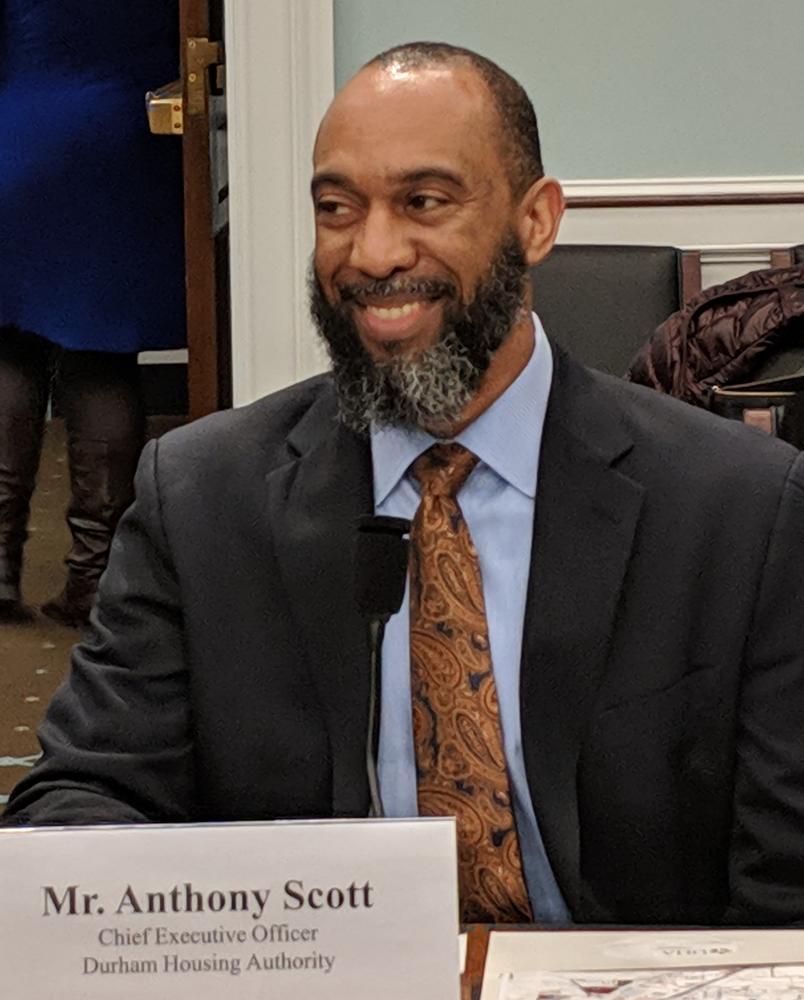
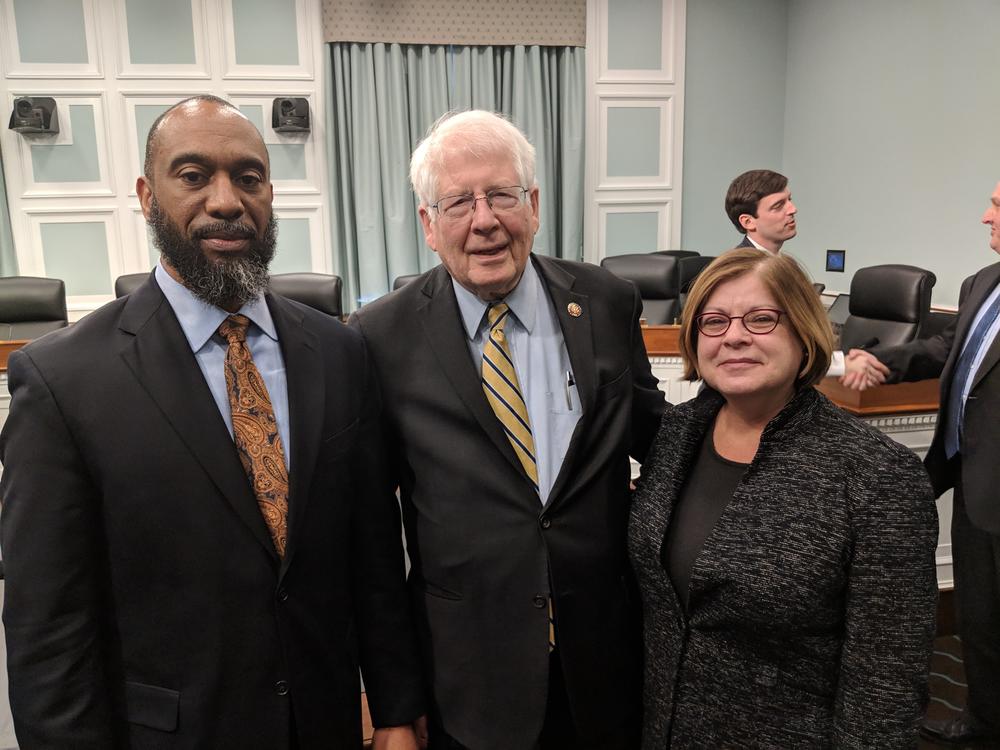
WASHINGTON (March 7, 2019) – This morning, Durham Housing Authority CEO Anthony Scott testified on behalf of the Council of Large Public Housing Authorities before the House Appropriations Subcommittee on Transportation, Housing and Urban Development, and Related Agencies during its hearing, “Stakeholder Perspectives: Affordable Housing Production.” Scott emphasized the critical need for reinvestment in the nation’s Public Housing and Section 8 Housing Choice Voucher programs, which are the foundation of the affordable housing market.
“As a nation, we are now at a critical stage for needing aggressive action to undertake affordable housing production and preservation,” testified Scott.
In addition to calling for increased appropriations to the public housing capital and operating funds, Scott urged Congress to combat the affordable housing shortage by providing housing authorities greater flexibility to preserve and transform public housing through the Rental Assistance Demonstration Program, the Moving to Work program, and with selected and targeted flexibilities through a defined statutory process.
“Fundamentally, the RAD program allows DHA to create mixed-use and mixed-income communities that allow a more diverse socio-economic living environment,” testified Scott. “Our barriers are a RAD program that doesn’t allow enough flexibility to fully leverage development opportunities with private sector development… The private market moves at a faster pace and waiting on a RAD approval to transfer units could result in a missed opportunity.”
Scott also recommended Congress eliminate the Faircloth Amendment, which prohibits the development of new public housing units; invest in broad place-based solutions such as the Choice Neighborhoods Initiative to address neighborhood and community development needs; encourage greater interdepartmental collaboration to facilitate cross-sector partnerships with housing; and distinguish public and affordable housing as an integral part of the national infrastructure.
“We thank Chairman Price for inviting CLPHA and Mr. Scott to participate in today’s hearing, and for recognizing that public housing authorities are essential to local housing markets as the owners and operators of most of the assisted housing that serves extremely low-income households while generating wide reaching economic impacts,” said CLPHA Executive Director Sunia Zaterman. “We look forward to working with the committee to increase support for public and affordable housing programs that provide decent housing to the nation’s most vulnerable citizens, connect low-income workers to economic opportunities, and spur regional job creation and economic growth.”
Along with Scott, representatives from the North Carolina Housing Finance Agency and National Housing Trust were invited to participate in the Appropriations Subcommittee hearing.
The testimony is posted to the Committee website and the live-stream recording of the hearing can be viewed on the Committee's YouTube channel.
About the Council of Large Public Housing Authorities
The Council of Large Public Housing Authorities is a national non-profit organization that works to preserve and improve public and affordable housing through advocacy, research, policy analysis and public education. CLPHA’s 70 members represent virtually every major metropolitan area in the country. Together they manage 40 percent of the nation’s public housing program; administer more than a quarter of the Housing Choice Voucher program; and operate a wide array of other housing programs. Learn more at clpha.org and on Twitter @CLPHA and follow @housing_is for news on CLPHA’s work to better insect the housing field and other areas of critical importance such as health and education.
###
Washington, DC – Members of the Campaign for Housing and Community Development Funding (CHCDF) hosted a national call with over 2,200 registrants yesterday, January 15, about the effects of the partial government shutdown on low-income people and communities and the affordable housing programs that serve them.
Experts from multiple affordable housing organizations shared information on the shutdown’s impact on federal affordable housing and community development programs and emphasized that the longer the shutdown continues, the more negatively it will impact people with the lowest incomes – seniors, people with disabilities, and families with children. Panelists spoke about the shutdown’s effects on public housing, project-based rental assistance, housing vouchers, rural housing, and housing and services for seniors, people with disabilities, the homeless, and those at risk of homelessness.
The panel encouraged listeners to contact their members of Congress and tell them to vote now—before residents in federally assisted housing experience rent hikes and evictions—to reopen the federal government and pass clean fiscal year 2019 spending bills. Listeners were also urged to encourage their members of Congress to sign onto a “dear colleague” letter led by Senator Mark Warner (D-VA) and Representative Marc Veasey (D-TX) to be sent to President Trump on the shutdown’s severe consequences for affordable housing.
“Nearly 700 property owners that have HUD contracts to operate housing affordable to the lowest-income seniors, people with disabilities, and families with children have seen those contracts expire due to the shutdown, and more will expire this month and next,” said NLIHC President and CEO Diane Yentel. “These contract suspensions put the homes of nearly 70,000 low-income renters at risk of serious rent hikes and evictions. HUD has asked owners of these properties to dip into their savings, if they have any, to cover the costs. Some will be able to do so, but not forever, and some have already communicated to their tenants that rent hikes are coming. The longer the shutdown goes on, the more untenable it will become for properties owners to keep scraping by without their federal contracts - and the more the lowest-income renters will suffer.”
“Public housing authorities, which are responsible for housing over 3 million low-income households nationwide, are doing everything they can to keep things running during this period of tremendous uncertainty, but it is unclear how long they can continue with business as usual for residents and landlords,” said Council of Large Public Housing Authorities Executive Director Sunia Zaterman. “Without a guarantee from HUD that funding will be available in March, many PHAs will need to notify landlords and residents next month that delayed payments are a possibility. Anxious residents and landlords fearful of missed payments, combined with other cascading impacts due to lack of staffing at HUD, including program grants not being renewed and affordable housing development deals not being approved, amount to an unmitigated disaster for millions of low-income families.”
“As the budget stalemate continues, the impact on small towns and rural families grows more severe. Everyday Americans are losing out on billions of dollars’ worth of affordable housing, clean drinking water, and community facilities, like town halls, fire stations and hospitals,” said Housing Assistance Council CEO David Lipsetz.
“HUD has made clear already, in December, [it has] not renewed 224 contracts for rental assistance in Section 202 Housing for the Elderly communities, and more are set to expire in January,” said LeadingAge President and CEO Katie Smith Sloan.“LeadingAge’s members, all nonprofits, rely on regular and adequate funding to provide quality affordable housing to some of the nation’s lowest-income older adults. The average older adult in HUD’s Section 202 Housing for the Elderly program has an annual income of $13,300, an income far too little to make ends meet in any private housing market. More than 400,000 older adults rely on the Section 202 program, while another 1.2 million rely on other HUD programs for housing assistance. We urge Congress and the White House to end the shutdown so that . . . these 1.6 million older adults have the stable housing they need to age with dignity.”
“The shutdown’s impacts range far beyond Washington, DC,” said National Association of Housing and Redevelopment Officials CEO Adrianne Todman. “It’s hurting workers, small businesses, farmers, and housing providers across the country. Housing providers are struggling with contingency plans to make repairs to units and to pay landlords in the voucher program. And guess who will suffer the most? The low-income families and seniors who rely on a functioning federal government. They are at risk now and will be at even greater risk as the shutdown continues. If any of these families are harmed by the shutdown, the blame lays squarely at the feet of the White House and the Congress.”
“Every day that it drags on, the needless government shutdown threatens more low-income seniors, people with disabilities, and seniors who rely on critically important federally assisted affordable housing,” said National Housing Trust Federal Policy Director Ellen Lurie Hoffman. “Private rental housing owners are scrambling to cover operating costs for which the federal government is contractually responsible, with no end in sight.”
Listen to the CHCDF national call on the impacts of the shutdown on affordable housing programs and community development at: https://bit.ly/2DersVM
Read NLIHC’s latest update on the shutdown at: https://bit.ly/2AzHoju
Check out NLIHC’s interactive map and a state-by-state breakdown of how the shutdown is impacting some HUD-assisted housing.
###
About the Council of Large Public Housing Authorities (CLPHA): The Council of Large Public Housing Authorities is a national non-profit organization that works to preserve and improve public and affordable housing through advocacy, research, policy analysis and public education.
About National Low Income Housing Coalition (NLIHC): Established in 1974 by Cushing N. Dolbeare, the National Low Income Housing Coalition is dedicated solely to achieving socially just public policy that assures people with the lowest incomes in the United States have affordable and decent homes.
About Campaign for Housing and Community Development Funding (CHCDF): An education, strategy and action hub led by NLIHC. The coalition of more than 70 national organizations works to ensure the highest allocation of resources possible to support affordable housing and community development. CHCDF’s members represent a full continuum of national housing and community development organizations, including faith-based, private sector, financial/intermediary, public sector and advocacy groups.
A coalition of more than 70 national organizations tell the Administration & Congress that people with the lowest incomes will be hit hardest if the shutdown continues.
Washington, DC - Members of the Campaign for Housing and Community Development Funding (CHCDF) sent a letter to congressional leaders today calling on them to protect low-income Americans by ending the government shutdown and passing full-year spending bills that provide strong funding for affordable housing and community development programs.
CHCDF, a coalition led by the National Low Income Housing Coalition, expressed strong concern for the shutdown’s immediate and long-term impacts on affordable housing programs and the low-income people they serve. The letter also called out the shutdown’s impact on the housing stability of low-wage government contractors, like janitors, security guards, and cafeteria servers, who often live paycheck-to-paycheck. These individuals working without pay are at risk of being unable to cover their rent payments, putting them at risk of eviction.
The government shutdown is thwarting critical investments in local communities and in affordable and accessible housing for low-income families, threatening to destabilize over four million households that depend on HUD’s rental assistance programs and creating widespread uncertainty for affordable housing investors.
“The longer the shutdown continues, the more the lowest income people will be hard hit,” said NLIHC President and CEO Diane Yentel. “Residents living in HUD-subsidized properties are some of our country’s most vulnerable people - the clear majority are deeply poor seniors, people with disabilities, and families with children. They rely on government assistance to remain housed, and a prolonged government shutdown puts them at increased risk of eviction and potentially homelessness. It’s incredibly reckless to risk the homes of our country’s lowest-income and most vulnerable people as perceived leverage for a border wall.”
“The partial government shutdown is a disaster for the millions of low-income families, seniors, and people with disabilities who depend on HUD assistance for safe, stable housing,” said Council of Large Public Housing Authorities Executive Director Sunia Zaterman. “Funding uncertainty puts more than two million voucher households at risk of losing their homes, and a lack of operating fund payments will force public housing authorities to shut units that cannot be repaired or properly maintained.”
“The bottom line for us is care and concern for the people we serve, and the shutdown hurts them,” said CSH President and CEO Deborah De Santis. “Every hour the deadlock drags on means people who really need housing and services are not going to get them. And the longer critical agencies stay shuttered the more likely it is families, children and other individuals now counting on help to stay housed and healthy will have their lifelines cut off.”
“Each day of the shutdown makes it harder and harder for the nearly 10 million people who live in HUD-assisted housing – low-income families, people with disabilities, veterans, and the elderly – to avoid eviction, keep their heat turned on, and access health care and supportive services,” said Enterprise Community Partners President Laurel Blatchford. “Congress and the Administration must find a way to restore funding for programs critical to the livelihoods of Americans across the country.”
“As the shutdown continues, HUD has made clear it will become unable to renew rental assistance contracts for housing providers,” said LeadingAge President and CEO Katie Smith Sloan. “LeadingAge’s members, all nonprofits, rely on regular and adequate funding to provide quality affordable housing to some of the nation’s lowest-income older adults. The average older adult in HUD’s Section 202 Housing for the Elderly program has an annual income of $13,300, an income far too little to make ends meet in any private housing market. More than 400,000 older adults rely on the Section 202 program, while another 1.2 million rely on other HUD programs for housing assistance. We urge Congress and the White House to end the shutdown so that each of these 1.6 million older adults have the stable housing they need to age with dignity.”
“Local governments rely on consistent contact with HUD in order to ensure reliable funding for services, projects and developments funded with grant programs like the Community Development Block Grant (CDBG) and HOME Investment Partnerships program,” said National Association for County Community and Economic Development Executive Director Laura DeMaria. “These programs provide vital services and resources to low-income families across the country. As long as HUD remains shut down, local governments, their community partners, and the low-income families they serve will lack the stability and constant flow of funds they need to operate.”
“This shutdown is hurting families across the country whether or not they work for the federal government and prolonging it will make matters worse,” said NAHRO CEO Adrianne Todman. “Capital expenses that require approval from HUD employees are left undone, and housing vouchers are not reaching families in need as housing agencies curtail additional spending. We should be especially concerned about the public- and private-sector landlords in the project-based rental assistance program who are left without funding and/or contract renewals. Those who can are already dipping into their reserves to make repairs and respond to their residents’ needs, but these reserves only go so far. This is unacceptable. End the shutdown.”
“Vulnerable Americans are the casualty of the current political battle. As a partial federal shutdown drags on, essential federal housing programs and tenant protections are in jeopardy,” said National Housing Law Project Executive Director Shamus Roller.
“The needless government shutdown has put the lowest-income residents at risk and left private rental housing owners scrambling to cover operating costs for which the federal government is contractually responsible,” said National Housing Trust Federal Policy Director Ellen Lurie Hoffman. “This threatens seniors, people with disabilities, and families who are struggling to make ends meet, as well as the viability of critically important affordable housing properties.”
Read the complete letter outlining the impact of the shutdown on specific affordable housing programs at: https://bit.ly/2RkB8Xd.
###
About the Council of Large Public Housing Authorities: The Council of Large Public Housing Authorities is a national non-profit organization that works to preserve and improve public and affordable housing through advocacy, research, policy analysis and public education.
About National Low Income Housing Coalition (NLIHC): Established in 1974 by Cushing N. Dolbeare, the National Low Income Housing Coalition is dedicated solely to achieving socially just public policy that assures people with the lowest incomes in the United States have affordable and decent homes.
About Campaign for Housing and Community Development Funding (CHCDF): An education, strategy and action hub led by NLIHC. The coalition of more than 70 national organizations works to ensure the highest allocation of resources possible to support affordable housing and community development. CHCDF’s members represent a full continuum of national housing and community development organizations, including faith-based, private sector, financial/intermediary, public sector and advocacy groups.
|
CLPHA Working with Biden Administration to Speed ERA Fund Distribution (Washington, D.C.) August 27, 2021 -- Statement from CLPHA Executive Director Sunia Zaterman on the Supreme Court's blocking of the CDC's eviction moratorium:
“As mission driven organizations public housing authorities believe that keeping residents housed is the most effective policy for the families, communities, and public health safety. Housing authorities continue to take a multitude of steps to keep their residents housed, including connecting residents with legal and relief resources, streamlining the income recertification process, operating rent relief programs, creating partnerships with community service organizations, and so much more. “The most effective lifeline available to tenants and landlords are the significant funds in the Emergency Rental Assistance Program that Congress passed in two tranches late last year and in the first quarter of 2021. CLPHA is working closely with the Biden administration by providing recommendations that will expedite emergency rental assistance as swiftly as possible.” |
|
||||||
|
|||||||
|
|
||
|
About the Council of Large Public Housing Authorities
About CLPHA’s Housing Is Initiative |
||
|
(Washington, D.C.) August 4, 2021: Statement from CLPHA Executive Director Sunia Zaterman on the extension of the CDC’s eviction moratorium:
“The Center for Disease Control’s order to extend the eviction moratorium in areas where COVID infections are rapidly rising is a welcome development that will keep millions housed while also decreasing the spread of the infectious Delta variant. CLPHA applauds the efforts of Congresswoman Maxine Waters (D-CA) for sounding the alarms as the current moratorium extension wound down and Congresswoman Cori Bush (D-MO), whose personal experience with being evicted grounded her sleep-in protest on the Capitol steps in an authentic voice that resonated with Congressional leaders, the White House, and everyday Americans.
“Throughout the pandemic, mission-driven housing authorities have been committed to preventing as many evictions as possible and only considering them as a last resort. CLPHA has advocated for emergency rental assistance during the pandemic as the most effective way to keep low-income families in their homes by providing assistance to tenants and property owners. The $46 billion that Congress allocated for emergency rental assistance as part of two COVID relief packages was one of the first relief programs to adequately meet the need caused by the pandemic. While the distribution of the relief funds has been uneven, CLPHA will take every opportunity during the 60-day extension to work with Congress and the administration to expedite the distribution of emergency rental assistance of behalf of tenants and landlords so that there no need for another moratorium.”
|
|
|
|
|
||
|
|
||
|
About the Council of Large Public Housing Authorities
About CLPHA’s Housing Is Initiative |
||
|
(202) 550-1381
For Immediate Release
July 30, 2021 (Washington, D.C.) July 30, 2021 – CLPHA Executive Director Sunia Zaterman released the following statement upon the scheduled end of the Centers for Disease Control and Prevention’s (CDC) nationwide eviction moratorium on July 31, 2021:
“While millions of low-income households are facing the threat of homelessness with the eviction moratorium scheduled to end this week, public housing authorities are committed to using every tool and resource available to keep residents safely housed. Public housing authorities understand that keeping people housed is the most cost-effective approach to prevent homelessness. Evictions are expensive, burdensome, and time consuming, and they increase turnover and vacancy costs for housing authorities. Furthermore, evictions are a soul-crushing experience that impacts every aspect of one’s life and are a significant contributor to long-term unemployment and homelessness.
“Throughout the pandemic, housing authorities have connected at-risk residents with additional support and services, including obtaining emergency rental assistance. The good news is the Treasury-administered Emergency Rental Assistance Program has increased the speed of its fund distribution. We know that more can be done to streamline access to funds by partnering with local housing authorities to help those assisted households in need.
“Congress funded emergency rental assistance programs because they are the most cost-effective measure to avoid the destructive and demoralizing process of evictions and prevent poverty. We urge the Treasury and Housing and Urban Development Departments and the White House to continue to work closely together to distribute emergency rental assistance as quickly and efficiently as possible to stem the tide of evictions.”
|
|
|
|
|
||
|
|
||
|
About the Council of Large Public Housing Authorities
About CLPHA’s Housing Is Initiative |
||
In this December 27, 2018 article by Bruce Japsen for Forbes.com, CLPHA Executive Director Sunia Zaterman discusses the importance of cross-sector collaborations between housing and health care to improve life outcomes for low-income families and seniors.
“We’re housers with expertise in the management and operation of affordable housing for low-income families and seniors, but we are not experts in the complexities of health care service delivery,” Zaterman said. “That’s why nearly all of the public housing authorities we surveyed work with a partner to provide health services. Most would do more if they had the funding and resources to commit to their health partnerships.”

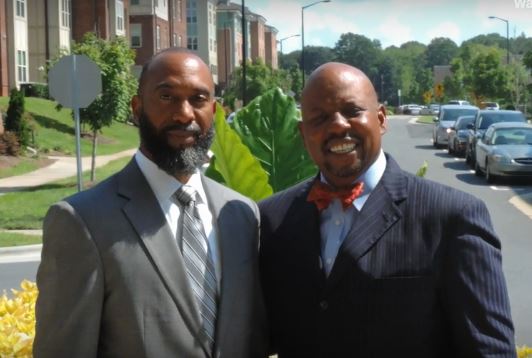
Anthony Scott, CEO of Durham Housing Authority (left) and A. Fulton Meachem, President & CEO of Charlotte Housing Authority (right) in Durham, NC.
CLPHA is pleased to see that our members are visiting each other’s communities to share knowledge, ideas, and best practices for preserving and strengthening their public housing portfolios and resident services.
In August, the Charlotte Housing Authority (CHA) hosted the Durham Housing Authority (DHA) and Durham city officials on a bus tour of Charlotte public housing properties. The Durham delegation also met with CHA staff, board members, and residents to discuss how Charlotte is transforming its housing portfolio and resident services through entrepreneurial efforts in real estate development, bond programs, property management, and family self-sufficiency programs. You can watch a video slideshow of the Charlotte & Durham meeting here.
In October, residents, staff, and board members from the Minneapolis Public Housing Authority (MPHA) traveled to Cambridge, MA to meet with Cambridge Housing Authority staff and tour public housing communities. MPHA learned from Cambridge about their ongoing, comprehensive public housing transformation financed through the RAD program, Low-Income Housing Tax Credits, and other funding tools. In a post-trip recap, MPHA said their residents expressed the importance of seeing and hearing for themselves that these programs did not result in displacement. In fact, said MPHA, “CHA residents were often able to simply move units and continue living in their building even as the work proceeded around them.” You can watch a video about MPHA’s trip to Cambridge here.
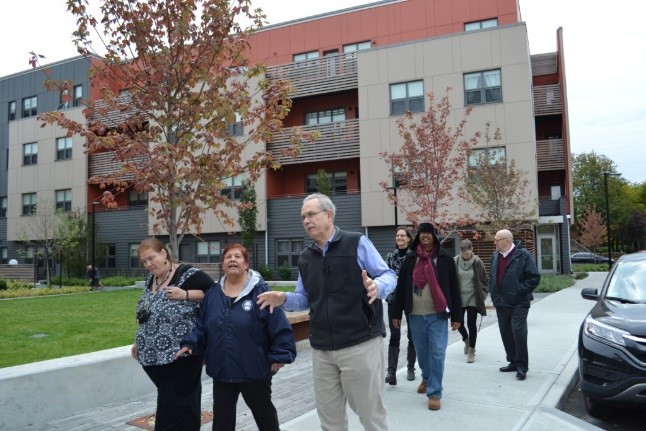
Representatives from the Minneapolis Public Housing Authority on a bus tour of Cambridge Housing Authority properties.
The Housing Authority of the City of Pittsburgh (HACP)will redevelop the vacant Larimer School, which is listed on the National Register of Historic Places, into 35 affordable housing units. This project is part of HACP’s larger Larimer/East Liberty Choice Neighborhoods redevelopment plan.
The Otto Bremer Trust awarded a $100,000 grant and a $500,000 low-interest loan to the Minneapolis Public Housing Authority (MPHA). MPHA will use the loan to support housing authority operations for its 6,000 public housing units and will use the grant to fund construction of the 16-unit Minnehaha Townhomes, slated to open in 2019.
From Washington County, OR's press release:
The Housing Authority of Washington County joined partners today to celebrate the opening of Dolores, a new 67‑home affordable housing community at Walker Road in Hillsboro. The County provided 12 Regional Long‑term Rental Assistance Vouchers and 8 Project‑Based Vouchers to help extremely low‑income families access stable housing.
“Affordable housing is essential to the health, stability, and economic strength of Washington County,” said Washington County Board Chair Kathryn Harrington. “Dolores brings much ‑ needed homes to Hillsboro and shows what cross‑sector partnership can achieve. We are grateful for Hacienda CDC’s leadership and commitment to serving Washington County families.”
Developed by Hacienda CDC, Dolores is the non-profit’s first affordable housing community in the county. The project provides one‑ to four‑bedroom apartments for households earning 30% to 60% of the area median income, including 46 family‑sized homes. Supportive housing delivered with New Narrative will serve people transitioning out of homelessness.
“Housing is the foundation for opportunity and prosperity, and projects like Dolores are exactly the kind of partnership Oregon needs to meet this moment,” said Gov. Tina Kotek, who spoke at the event. “By creating affordable homes for families, we are creating stability and connection and building a stronger future for everyone.”
Amenities include community space, a courtyard, children’s play area, bike storage, and offices for property management and supportive services. The project also incorporates energy‑efficient features such as rooftop solar and heat‑pump systems.
Dolores was made possible through partnerships with the City of Hillsboro, Metro, Oregon Housing and Community Services, Beneficial State Bank, Red Stone Equity, New Narrative, Access Architecture, LMC Construction, and Northwest Real Estate Capital Corp.
From the Sacramento Redevelopment and Housing Agency's newsletter:
The Sacramento Housing Authority Marina Vista community was selected for the launch of the City of Sacramento’s Last Mile Broadband Connectivity Project at a groundbreaking on June 18, 2026. Funded by $38.7 million California Public Utilities Commission Last Mile Connectivity Grant with support from Rep. Doris Matsui, the effort is part of the City’s strategy to help bridge the digital divide by providing high-speed internet access in underserved neighborhoods.
The project is a significant community resource that will provide seamless wraparound stability in signal strength to complement the Housing Authority’s enhanced free wifi signal available to residents in this community. A Housing Authority study found that during the COVID-19 pandemic, families struggled to maintain their daily activities. Nearly 25 percent of children utilizing remote learning were dropped from their classes due to a lack of internet connectivity or low bandwidth. Funding from Intel and assistance from Amazon Web Services (AWS) and FutureTech seeded a pilot program to address the digital divide at Marina Vista and Alder Grove, two of its largest public housing communities. Testing showed that improvements to existing wifi capability and stability through state-of-the art technology combined with affordability would greatly enhance the user experience.
With a five-year $1.4 million funding commitment from the City of Sacramento, in partnership with Federated Wireless, free high-speed wifi is fully implemented, closing the digital divide and to date, connecting approximately 300 residents to greater opportunities for success. Today, through this important partnership and collaboration, the Last Mile Broadband Project will help level the playing field and give residents in our housing communities a chance to live better, achieve more, and reach their full potential. The new technology expands access to telehealth, education, employment and basic services. Students will be able to complete homework remotely and parents can conveniently apply for jobs. Approximately 300 residents are utilizing the wifi connection in their homes.
From Governor Mikie Sherrill's press release:
Governor Mikie Sherrill today joined the Department of Community Affairs (DCA), Department of Veteran Affairs (DVA), and military veterans from across New Jersey at the Trenton War Memorial to announce that, through the Bringing Veterans Home initiative, the State created a coordinated support system that fully funds housing resources so no veteran has to go homeless. The initiative makes veteran homelessness rare, brief, and non-recurring in New Jersey. Now, more veterans enter housing in New Jersey than enter homelessness each month, and the initiative is sustaining this performance consistently.
“I am incredibly honored to announce that, because of the quick and effective response of our Bringing Veterans Home initiative, every veteran in New Jersey can now access stable housing,” said Governor Sherrill. “This milestone is a groundbreaking achievement. No veteran in our state should endure the hardship of homelessness. We are proud that New Jersey is a leader in ending veteran homelessness and we stand ready to serve as a model for other states on this critical issue."
“If a New Jersey veteran experiences a housing crisis, Bringing Veterans Home is the backstop preventing full scale homelessness,” said DCA Commissioner Jacquelyn A. Suárez. “Our work is more than housing placement. It is about long-term stability. We are making sure veterans have access to the services and support they need to remain in stable, quality housing that they can call home.”
“In a state where our motto is Liberty and Prosperity, no veteran should go to sleep without a roof over their head,” said DVA Commissioner Vincent Solomeno III. “Bringing Veterans Home demonstrates what is possible when government stops asking people in crisis to navigate bureaucratic boundaries and instead organizes itself around the outcome we want to achieve.”
The Bringing Veterans Home initiative launched in November 2024 with a mission to effectively end veteran homelessness across the state. More than $30 million in state and federal funds were committed over a two-year period to help place New Jersey veterans experiencing or at risk of homelessness in stable housing and provide them with support services. Since the initiative’s launch, the State has helped permanently house more than 2,500 veterans. Under the initiative, a veteran is anyone who meets the federal and state definitions of “veteran.” This includes veterans of active duty and reserve components.
DCA’s Office of Homelessness Prevention leads this effort via a dedicated project management team in coordination with DVA, federal partners at the U.S. Department of Veterans Affairs and U.S. Department of Housing and Urban Development, and multiple veterans service organizations. Bringing Veterans Home marks the first time veteran service organizations in New Jersey have formally partnered with the State in the fight against veteran homelessness.
“The phrase ‘homeless veteran’ should not be a thing,” said Senator Raj Mukherji, chairman of the Senate Military and Veterans’ Affairs Committee. “Those who served our nation in uniform deserve, at a minimum, to never go without a roof over their heads. This milestone and Governor Sherrill’s whole-of-government commitment to achieving functional zero represent serious progress toward our obligation to our veterans.”
“The primary measure of Bringing Veterans Home’s success is not a single point-in-time count of veterans who are homeless, but its sustained capacity to rapidly assist veterans in need of housing,” said DCA Assistant Commissioner Janel Winter, who directs the Division of Housing and Community Resources. “We’ve changed the paradigm in New Jersey to create a sustainable system that provides quick and effective outreach to veterans who are homeless or at risk of homelessness, and assist them quickly into shelter, housing, and access to the services they need.”
Through the Bringing Veterans Home initiative, six regional coordination hubs are now established across the state to improve case coordination and standardize a homeless veteran’s access to housing services. Each regional hub is managed by a social services organization that specializes in homelessness interventions. DCA selected the organizations through a competitive request for proposals.
The regional hubs can access resources that are supported by state and federal funds such as Veterans Affairs Supported Housing (VASH) vouchers, State Rental Assistance Program (SRAP) vouchers, HOME program assistance, Supportive Services for Veterans and Families (SSVF) programs, rapid rehousing, street outreach, and emergency sheltering.
“Bringing Veterans Home works because of consistent partner participation, robust communication, and shared data visibility,” said Tina McGill, director of DCA’s Office of Homelessness Prevention. “This achievement shows what’s possible with coordinated commitment and provides a framework we can replicate for other vulnerable populations in New Jersey.”
“New Jersey is showing what’s possible when state leaders, local providers, and veteran organizations treat veteran homelessness as a solvable challenge and organize around a clear goal: helping every veteran in a housing crisis quickly reach a stable home,” said Rosanne Haggerty, president and CEO of Community Solutions, a nonprofit organization that works with local and national partners to reduce veteran homelessness. “Bringing Veterans Home pairs sustained investment in housing assistance with real time data, coordinated action, and accountability for results. New Jersey veterans get fast, effective help in exiting homelessness, with few returning. This disciplined, outcomes-focused approach is the way to make veteran homelessness rare and brief across the country.”
Referrals in to Bringing Veterans Home can take place in multiple ways:
Community partners can submit referrals online on the Bringing Veterans Home webpage at https://bvh.dca.nj.gov/.
Veterans can self-refer either through the Bringing Veterans Home web form, by calling NJ Vet2Vet and/or NJ 211, by visiting any affiliated housing or homelessness services provider, or through engagement with a Bringing Veterans Home street outreach team.
Existing service providers can make electronic referrals through the NJ Homelessness Management Information System (HMIS) or DCA’s SimpliGov platform.
The program requires veterans be contacted within 24 hours after referral with a goal of placement in stable housing within 30 days of initial contact. The process includes assessing veterans for housing priority, identifying any barriers they face, and developing a detailed plan to facilitate housing as quickly as possible.
Bringing Veterans Home at present has enough permanent housing capacity to ensure veterans are stably housed faster than new homelessness cases occur, with minimal returns to homelessness.
From the King County Housing Authority's press release:
The King County Housing Authority (KCHA), joined by the City of Issaquah, US Representative Kim Schrier, public officials, funding partners, development partners, and community stakeholders, today celebrated the groundbreaking for Trailhead Apartments, a new transit-oriented housing community that will bring 154 affordable rental homes to the heart of Issaquah.
Trailhead Apartments will provide affordable homes for households earning up to 40% and 60% of Issaquah’s Area Median Income (AMI), addressing the growing need for affordable housing on the Eastside. Developed by KCHA, the eight-story community will feature a mix of family-sized apartments and amenities designed to support long-term housing stability and quality of life.
The development is part of a broader mixed-income community that includes affordable homes developed by KCHA and market-rate housing developed separately, connected by public open space and pedestrian pathways. Plans for the site include a public plaza, restored wetlands, and a multimodal trail, and community-serving commercial space owned by the City of Issaquah.
Resident amenities will include a community room, exercise room, study room, fourth-floor courtyard, bicycle storage, and other shared spaces. The development is located next to the Issaquah Transit Center and across from Tibbetts Valley Park, and is designed to support a vibrant, walkable, mixed-income neighborhood centered around transit access and community connection.
Trailhead Apartments will also include several homes operated by Life Enrichment Options (LEO) for individuals with intellectual and developmental disabilities, creating additional opportunities for inclusive community living.
Construction is now underway, with leasing and occupancy anticipated in 2028.
From the Cambridge Housing Authority's website:
Standing tall on the banks of the Mystic River in the heart of historic Medford Square, Saltonstall Apartments has been part of the community’s fabric since 1968. On Wednesday, June 24, a ribbon-cutting ceremony marked the beginning of a new chapter in the nearly six-decade-old residence.
That new chapter began in 2019, when Cambridge Housing Authority Deputy Executive Director of Development Margaret Donnelly Moran and former Executive Director Mike Johnston concluded a presentation on the impact of Cambridge Housing Authority’s redevelopment efforts to protect, preserve and transform its public housing properties. The first person to greet them afterward was Medford Housing Authority Executive Director Jeffrey Driscoll asking how he could implement a comparable plan in Medford.
The task was to evaluate MHA’s federal housing portfolio for repositioning, as well as its state portfolio for redevelopment. Assessing options for Saltonstall while considering options and available funding sources, the CHA team’s experience with similarly aged properties helped inform MHA that the property would qualify for HUD’s Section 18 disposition and trigger the tenant protection vouchers that would help fund the rehabilitation. It was not clear in the early stages that Low-Income Housing Tax Credits would be needed or that the CHA’s work with MHA would evolve from acting as a development consultant to becoming a development partner. In late 2022, after the project received no equity proposals, a unique co-development arrangement between the two agencies became necessary for the redevelopment to move forward.
To tackle a project of that scale, MHA needed a partner with a track record of success with large-scale renovations and navigating the complexities of LIHTC development financing. The conversation quickly turned toward a potential partnership. Soon after, Cambridge Housing Authority staff visited the property to assess how they could help. While the aging brick building faced significant challenges, both housing authorities recognized an opportunity to create something transformative, and an agreement between MHA and CHA was formalized in early January 2020 and entered a three-year planning phase.
During her remarks at the ribbon-cutting ceremony, CHA CEO Clara Fraden recalled, “When MHA approached CHA, they brought vision, commitment, and a deep responsibility to their residents and to the Medford community. MHA’s leadership knew Saltonstall needed a comprehensive renovation, and they were determined to do it in a way that preserved their public stewardship and strengthened the housing authority’s capacity for the future. That matters. Continued public stewardship is not easy in today’s economy, but it’s worth fighting for.”
Construction began in May 2023 to modernize all 200 existing apartments and add 22 new units, while preserving the property’s long-term affordability. The renovated one- and two-bedroom apartments feature central heating and air conditioning, accessible walk-in showers, and modern kitchens. Designed with community in mind, the building also includes welcoming gathering spaces throughout the first-floor lobby, a second-floor rooftop terrace, fitness and community rooms, and other flexible uses of space and amenities to support residents who wish to age in place.
From its thoughtfully designed apartments with modern amenities to its communal spaces, the renovated Saltonstall Apartments presents a vision of the future of affordable housing in Medford and stands as a testament to what is possible when neighboring communities work together toward a common goal. Together, two housing authorities have ensured that Saltonstall residents will have access to safe, modern, and dignified housing for generations to come.
Through the collaboration of two public housing authorities, Medford and Cambridge, the redevelopment of Saltonstall Apartments demonstrates the power and potential of the public-public partnership. Working together, CHA and MHA were able to maintain public control of the property, create financial resources for the public entities that can be reinvested into the property or mission, and allow for truly public accountability and transparency. And as part of that unique co-developer arrangement between the two housing authorities, CHA will eventually exit the deal, leaving MHA the property’s sole owner.
“When two housing authorities succeed together, the entire public sector succeeds.” Fraden concluded. “And, Saltonstall is proof of what is possible when public agencies choose to stand together, learn from each other, and stay focused on the people and communities we are here to serve.”