Welcome to CLPHA's Press Room
CLPHA experts welcome interview requests from print, radio, television, and online reporters and are happy to provide their insights on issues of public housing and related legislation and policy.
For media inquiries, please contact:
David Greer
Director of Communications
(202) 550-1381 or [email protected].
*Please let us know if you are working on deadline.
To view all of CLPHA's press releases, click here.
To view all of CLPHA's press statements, click here.
You can subscribe here to our biweekly newsletter, events invite list, and topic specific newsletters. You can also follow us on Twitter at @CLPHA. Or, send us an email with your interests and we would be happy to add you to our press lists.
Thanks again for your interest in CLPHA!
From the Minneapolis Public Housing Authority's website article:
The Minneapolis Public Housing Authority (MPHA) provides public and deeply affordable housing to nearly 10,000 residents at 30 percent of the resident’s adjusted income. For the thousands of residents on a fixed income, that means being vulnerable to macroeconomic conditions like inflation for their regular cost of living expenses. While paying $20 more for groceries a week might not seem like a lot to some, for those living in MPHA housing on a fixed income, that change can significantly alter their monthly budget.
Since the pandemic, MPHA has seen a significant increase in the number of residents not making rent payments. Unfortunately, because federal regulations require MPHA to collect rent and prevent the agency from waiving owed balances from current residents, the agency has seen a growing number of residents who had their housing threatened because of changes in their personal expenses.
Seeing this trend emerge early in the pandemic, MPHA established an internal housing stabilization team dedicated to connecting residents that had back-owed rents with various financial and service supports. The team was intended to help residents solve both their immediate financial needs to remain housed and aid in making lasting changes to ensure continued rent payment.
During the pandemic, MPHA assisted nearly 750 MPHA families receive more than $2.5 million in rent relief through RentHelpMN. But while state rental assistance went away, the economic hardships of MPHA residents did not. As a result, the housing stabilization team shifted to Hennepin County’s emergency assistance program. In 2023, the team assisted nearly 450 MPHA families receive more than $800,000 in rent relief payments from Hennepin County’s emergency assistance program.
Leading this work at MPHA is A Vue, Housing Stability Coordinator. A works across MPHA teams and with external partners to ensure residents can remain housed when they face financial challenges.
“Whether it is a single event—like a hospital stay—or a series of unexpected expenses that prevented a resident from paying their rent, having to pay back-rent can be overwhelming,” said A Vue, Housing Stability Coordinator at MPHA. “Our housing stabilization work saves many from eviction.”
When a resident first misses their rent payment, numerous MPHA teams work to connect with the resident. Team members from property management, rent collection, and on-site social services teams work to connect with the residents to understand their unique situation and needs. In some cases, it is as simple as the resident forgetting to pay, but often the missed payment is a result of a changing financial situation.
If a MPHA resident misses a rent payment, staff takes an all-of-the-above approach to help the resident make their payment. On-site property management and social service teams will work to make sure the resident is receiving any social, medical, or wellness benefits they need. The housing stabilization team will connect with the resident to discuss a possible emergency rent assistance application to help clear owed balances.
“We are committed to assisting our residents. Offering support and resources, especially when they aren’t expecting it, brings hope,” said A.
From the Columbus Metropolitan Housing Authority's press release:
The Columbus Metropolitan Housing Authority (CMHA) Board of Commissioners today approved a combined total of nearly $100 million in new investments that will develop or preserve more than 700 apartments for Columbus-area seniors, families and people with disabilities.
“This major investment represents CMHA’s continuing commitment to provide affordable housing and meet the needs of our neighbors in Columbus and throughout Franklin County,” said CMHA Board Chair James L. Ervin Jr. “We remain dedicated to our values of community, commitment, and collaboration. CMHA will continue to leverage all our resources to find innovative paths to help meet the region’s evolving housing needs."
The community investments approved by CMHA’s Board include:
- River and Rich (phase II): Authorizing the issuance and sale of $47.5 million in general revenue bonds to acquire, construct and equip an approximately 234-unit rental housing community with commercial space. Partners on this project include: Casto, The Robert Weiler Company, The Kelley Companies, and Mark Cain, of S. Cain Development and Construction.
- Country Ridge: Issuing $17.5 million in general revenue bonds to renovate the 96-unit multifamily residential apartment complex at 5656 Farmhouse Lane in Hilliard.
- Maplewood Heights Apartments & Sugar Grove Square Apartments: Issuing $25 million in general revenue bonds to renovate the 71-unit complex of one-bedroom apartments at 91 Maplewood Ave. in Westerville and the 120-unit complex of one-bedroom apartments at 530 S. State St. in Whitehall. These apartment complexes serve senior families and provide comprehensive support services.
- Southpoint Place – Family & Singles: Investing $9 million to renew CMHA's Project-Based Vouchers (PBVs) through 2039 for residents of the 40-unit family complex of two-, three- and four-bedroom apartments and 15 single-unit apartments, which also receive comprehensive support services.
- Nelson Park Apartments: Acquiring and renovating the 172-unit multifamily community. Partners on this project include Renewal Housing Associates, LLC, and The Orlean Company. Financial details will be released pending final authorization of the terms.
The $90 million bond plan and $9 million allocation of PBVs is part of CMHA’s long-term strategy to grow investment in the region’s housing stock and to more effectively address central Ohio’s housing shortage, agency officials said. The additional $90 million in bonds will bring CMHA’s total bond issuance to more than $171 million for the development and preservation of affordable housing. This was spurred by the A+ rating the authority received from S&P Global Ratings.
S&P is considered the largest of the three major credit rating agencies, which also include Moody’s Investors Service and Fitch Ratings. The A+ rating was secured after extensive third-party reviews and reporting from CMHA’s finance team.
“Our S&P A+ rating will significantly reduce the agency’s cost of financing by providing access to the bond markets,” CMHA CEO Charles D. Hillman said. “These factors create a self-sustaining model that will assist us in delivering on our strategic goal of adding to our portfolio a minimum of 500 units of housing per year over each of the next five years.”
CMHA’s PBV program is part of the federal Housing Choice Voucher program administered by the U.S. Department of Housing and Urban Development.
Families or individuals in units with PBVs contribute 30% of their income for rent and utilities. The voucher pays the difference between the tenant contribution and the unit’s total rent and utility costs. Tenants in PBV units are assisted as long as they live in the unit and continue to qualify for the program.
PBVs are the largest, most available tool to create new project-based rental assistance, according to the Center on Budget and Policy Priorities, a nonpartisan research and policy institute that works at the federal and state levels on fiscal policy and public programs that affect low- and moderate-income families and individuals.
Data from the Affordable Housing Alliance of Central Ohio (AHACO) shows only 29 affordable housing units are available for every 100 extremely low-income households in the Columbus and Franklin County area. AHACO estimates 54,000 low- and moderate-income households in Franklin County pay more than half their income toward housing costs. Central Ohio also faces a deficit of 11,000 to 14,000 new housing units every year to support a healthy housing market.
From the San Diego Housing Commission's press release:
As crews on excavators and other heavy machinery worked to clear concrete and prepare the East Village site for construction, a groundbreaking ceremony across the street today celebrated an affordable housing development in collaboration with the San Diego Housing Commission (SDHC) that will provide 270 affordable rental apartments for San Diegans with lower income, including people experiencing homelessness.
“As Mayor, I’ve been working to make needed game-changing reforms to our city policies to increase the amount of housing that San Diegans can afford,” Mayor Todd Gloria said in a statement read at the groundbreaking. He was unable to attend the ceremony due to the ongoing efforts to support recovery from last week’s storm. “In partnership, it’s the home builders who put hammer to nail and do the work on the ground to create the homes that bring stability to people’s lives. It’s firms like Chelsea Investment Corporation and projects like Harrington Heights that are the real difference-makers in our efforts to solve our homelessness and housing crisis.”
Developed by Chelsea Investment Corporation near the intersection of Broadway and 13th Street in San Diego’s East Village neighborhood, Harrington Heights will remain affordable for 55 years for households with income up to 50 percent of the Area Median Income (AMI), approximately $62,000 for a three-person household. Some units will serve San Diegans with lower incomes, including individuals earning about $24,000 a year or less.
“When I speak to community groups, I often refer to this project, Harrington Heights, as an example of the kind of housing that San Diego needs to build,” said San Diego Councilmember Stephen Whitburn, whose District 3 includes the development site. “First, it has a lot of affordable units—270. This project is going to help a lot of people. And second, it’s deeply affordable and permanent supportive housing, which will help people who are struggling the most. This is the type of housing development that I hear from so many San Diego, it’s what they want to see.”
A mix of residents with diverse needs will call Harrington Heights home, including unhoused veterans, non-veterans experiencing homelessness, families and individuals with lower income, and families with members who have intellectual or developmental disabilities.
“When it is completed, the Harrington Heights development will be life-changing for many individuals and families who are struggling economically in our city today,” SDHC President & CEO Lisa Jones said. “More than ever, a stable place to call home with rent that is affordable is essential. And people can’t live their best quality of life without housing, every quality-of-life indicator, education, career opportunities, health, is better with housing. And we know how critical that is. And yet it remains out of reach for so many people.”
SDHC awarded 115 rental housing vouchers to help Harrington Heights residents pay their rent. Of those, 75 housing vouchers will assist individual experiencing homelessness, including 10 set aside specifically for veterans experiencing homelessness. The remaining 40 SDHC housing vouchers will be for households with lower income who are not experiencing homelessness, with annual income ranging from 25 to 40 percent of AMI. All the vouchers that SDHC awarded are tied to the development, so that when a resident moves on, the housing voucher remains to help the household that moves into a new unit at the property.
SDHC also awarded an $8 million loan that consists of federal and local funds that SDHC administers, including U.S. Department of Housing and Urban Development HOME Investment Partnership Program funding awarded to the City of San Diego and the City of San Diego Affordable Housing Fund. In addition, SDHC authorized the issuance of up to $68,700,000 in Multifamily Housing Revenue Bonds and $37 million in taxable bonds toward the development of Harrington Heights. These bonds were approved by the San Diego City Council, acting as the Housing Authority of the City of San Diego.
Harrington Heights, which also includes three managers units, is one of several developments taking shape in the East Village neighborhood of Downtown San Diego.
“That’s really what we’re doing here today, is to celebrate that in two-years’ time, we will be housing 273 households,” said Chelsea Investment Corporation Director of Development Heidi Mather. “Chelsea’s not alone in beautification and improvement of the East Village neighborhood. We join the City of San Diego, our nonprofit organizations, other developers, and contractors all of whom share the vision of a better East Village.”
Additional partners on Harrington Heights include the City of San Diego, which provided a development loan of $10.14 million as well as the land through a lease agreement; the California Department of Development Services and the San Diego Regional Center, which provided $4.25 million; and the California Department of Housing and Community Development (HCD), which provided more than $40 million in loans from several funding programs.
“The city became an early partner in this project. That contribution of the land, that early support and collaborative spirit between developer and the city, creates the best outcomes for the community. And I hope you all are excited about that. Because of the success of this project, and many like it in San Diego in particular, and across the state, to utilize our public land for the creation of affordable housing, HCD has added priority for projects to almost all of our funding programs for projects that are on public land,” said Tim Parham, HCD’s Data and Innovation Unit Chief.
Forty units at the development will be for residents with intellectual or developmental disabilities.
“These homes empower families and adults with developmental disabilities to in with increased self-reliance, with the support of the community,” said Kate Kinnamont, Associate Executive Director of the San Diego Regional Center, which will serve the residents with disabilities at Harrington Heights.
Residents who experienced homelessness will have on-site amenities and support and resources from Alpha Project, including education and employment services; integrated medical, dental and behavioral health services; substance use disorder services; case management; tenant services; and life skills classes.
Unhoused veterans who move into Harrington Heights will receive rental assistance through Veterans Affairs Supportive Housing (VASH) Project-Based Housing Vouchers from SDHC and supportive services from the U.S. Department of Veterans Affairs San Diego Healthcare System.
The development is near City College, the City College Transit Station, served by the San Diego Trolley and multiple bus lines, and SDHC’s main offices.
From Lucas Metropolitan Housing's press. release:
Joaquín Cintrón Vega is resigning from his role as president and chief executive officer at Lucas Metropolitan Housing (LMH). The Board of Commissioners has tapped current deputy executive director Rachel Gagnon as the interim chief executive officer. Her appointment is expected to be formalized at the next Board of Commissioners regular meeting.
Cintrón Vega is leaving LMH to lead the Housing Authority of the City and County of Denver. Cintrón Vega, who has served as president and CEO of LMH since March 2020, will remain in his current role until Feb. 28.
“Joaquin’s leadership has been transformative for Lucas Metropolitan Housing, and we are grateful for his service,” said LMH Chairman Alisha Gant. “As we open a search for the next head of LMH, we are pleased to be able to provide continuity of leadership and have Rachel serve as the interim CEO. We are confident that she will continue to provide our communities with the highest level of service and guidance."
The search for LMH’s next CEO will begin immediately, Gant said.
"By establishing a shared vision of success, my team and our partners achieved remarkable feats, and I am really proud of our combined efforts," Cintrón Vega remarked. "One day at a time, we have turned many obstacles into possibilities while providing compassionate service. We have provided direct supportive services, a practical route to economic progress, and affordable, high-quality housing for the people we serve. I'm confident Rachel will carry on with that job, and LMH is lucky to have her."

Under the direction of Cintrón Vega, LMH received several honors, such as being designated a Financial Opportunity Center, winning three Ohio Auditor of the State Awards in a row and being recognized as one of Toledo's top workplaces.
Also under Cintrón Vega leadership, LMH strengthened its alliances, establishing the Thumbs Up program in conjunction with United Way of Greater Toledo, formalizing a project labor agreement with the Northwest Ohio Building Trade Council and launching the Work Your Way Home program by utilizing its nonprofit affiliate Lucas Housing Services Corporation, to mention a few.
The acquisition of the new LMH headquarters, receiving high-performance designations from the U.S. Department of Housing and Urban Development, increasing grant support, broadening the scope of community services and securing previously unheard-of capital financing to build housing in high-opportunity areas to enhance neighborhood conditions creating mixed-income communities of choice are just a few of the accomplishments that Cintrón Vega is leaving behind. These projects use money from the Continuum of Care, HOME funds, Community Development Block Grants, Federal Home Loan Bank Affordable Housing Program and Low-Income Housing Tax Credits. Through the development projects it has in the works, LMH is currently positioned to offer stable homes to the elderly, families and young people.
Gagnon, who has been with LMH for two years, said she is ready to serve.
“I am excited to take on this new role to help LMH continue to enhance and improve affordable housing in Toledo,” said Gagnon. “I look forward to engaging with the Board, our partners and the residents of our communities to continue to make our mission and vision a reality."
Gagnon joined LMH as the chief of staff and later became the deputy executive director, responsible for oversight and executive-level leadership of the agency’s day-to-day operations and strategic initiatives. During her time at LMH, she has supported a vision to nurture creative partnerships by providing project management and supporting housing development deals aimed at serving transition-aged youth, families and elderly households.
Gagnon has devoted her career to advocating for inclusive housing developments and rebuilding response systems to effectively serve community members in need. She believes housing is a fundamental right for all individuals and is grateful to be part of LMH, an organization whose mission and values so closely align with her own.
A native Toledoan, Gagnon is a graduate of Ohio State University and Capital University Law School. She is licensed to practice law in Ohio and has devoted her career to serving the community through a variety of roles in the nonprofit and volunteer sectors. Before joining LMH, she served as the executive director of the Toledo Lucas County Homelessness Board and the chief operating officer at Sunshine Communities.
She was selected as a recipient of the Sisters of Notre Dame Toledo “Women Who Shine” award in 2023 and Toledo’s “20 Under 40” award in 2019 and participated in the 2022 Leadership Ohio cohort.
Gagnon is deeply involved in the community. She volunteers on several boards in Lucas County, including Open Table Toledo, Lucas County Children Services, Ohio Women’s Affordable Housing Network, Toledo Lucas County Homelessness Board and Cherry Street Mission Ministries.
From Denver Housing Authority's press release:
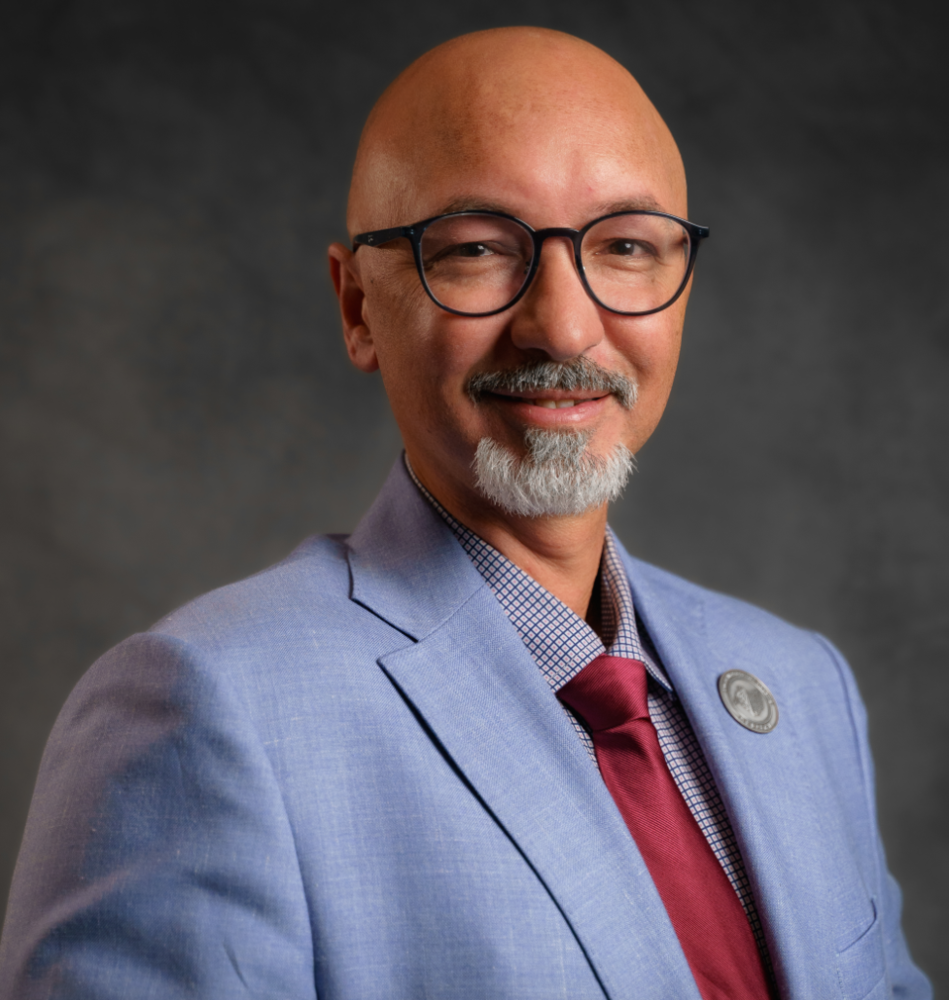 The Board of Commissioners of the Housing Authority of the City and County of Denver (DHA) announced today that Joaquín Cintrón Vega has been selected to serve as DHA’s next Chief Executive Officer following a national search and multiple rounds of interviews.
“DHA is pleased to announce the hiring of Joaquín Cintrón Vega as its new CEO,” Grace Buckley, Chair of DHA’s Board of Commissioners said. “Joaquín is a seasoned housing leader who understands the critical role DHA plays in the community and is committed to fulfilling the vision and strategy the organization has adopted.”
Cintrón Vega has served as the President & Chief Executive Officer at Lucas Metropolitan Housing in Toledo, Ohio, since 2020. Prior to this, he served as the Director of the Public Housing Division in Miami Dade County. With more than two decades of experience, Cintrón Vega has established a distinguished career in the management of federal housing assistance programs and policy development.
“Making a difference in the lives of people is an honor, and I am thrilled to join DHA. I am excited to lead a team that has already done an outstanding job serving our community, and I look forward to contributing to our shared mission,” said Cintrón Vega.” Our focus is on developing stronger partnerships, fostering unity, and empowering individuals to cultivate shared aspirations. By transforming neighborhoods into thriving ecosystems of collective progress and opportunity, we can make a real difference in the lives of those we serve as we succeed in providing high-quality, affordable housing with responsive services, enabling people and communities to prosper.”
Cintrón Vega’s first day with DHA will be April 1, 2024.